
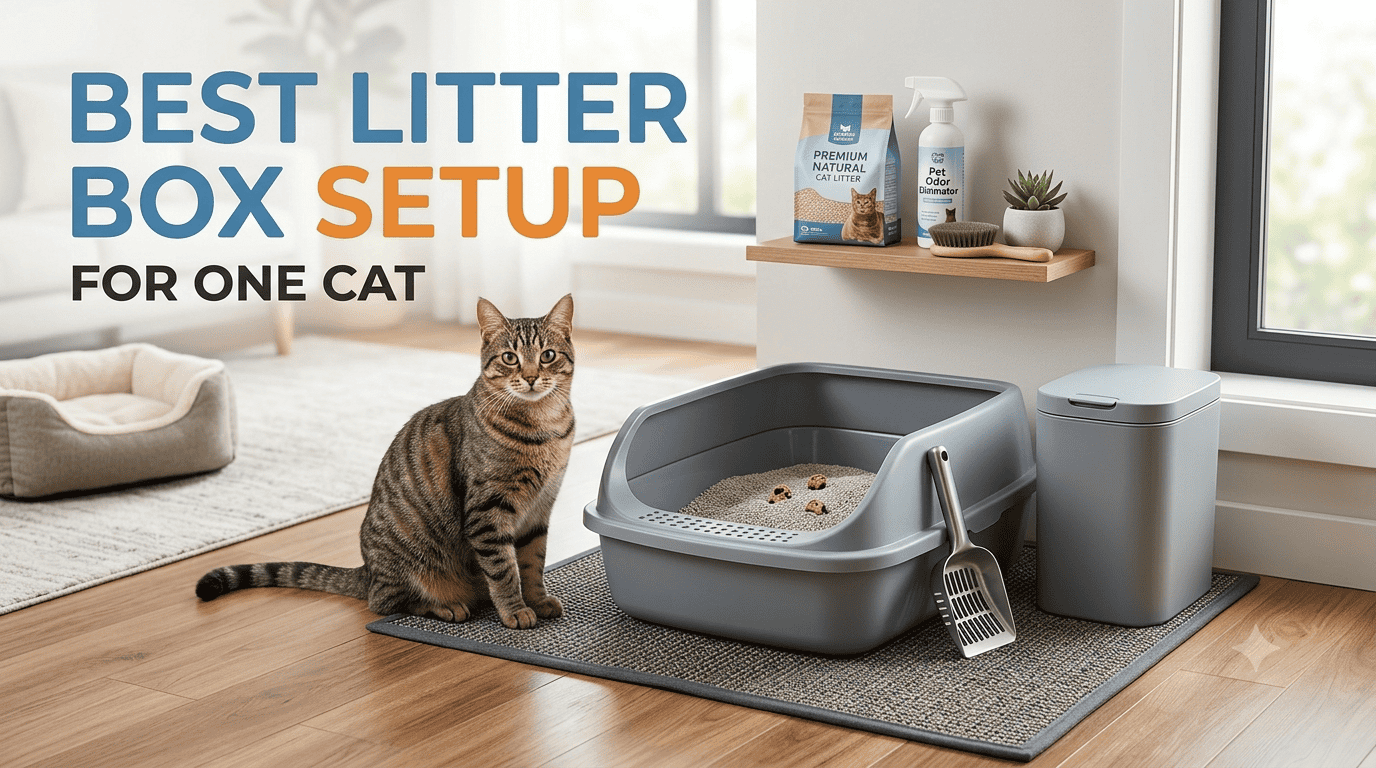
The best litter box setup for one cat — box size, placement, litter type, and the small details that actually stop avoidance problems before they start.
The box looked fine in the store. Right size, decent price, matched the bathroom color scheme somehow. Three weeks later there’s a mystery puddle by the bookshelf and the cat is giving you a look that says this is somehow your fault, which — turns out — it might actually be.
One cat sounds like it should mean one simple setup. It mostly does, but “simple” and “the setup people default to” aren’t the same thing, and the gap between them is where most avoidance problems start.
The Box Itself: Bigger Than You Think You Need
The most common mistake with a single-cat setup is buying a box sized for the cat’s current size rather than a full-grown, fully turning-around, fully-stretched-out cat. The general rule from vets and behaviorists is that a litter box should be at least one and a half times the length of the cat, nose to base of tail.
That sounds oversized when you’re picturing an eight-pound cat and a standard box from the pet store aisle. It isn’t. Cats need room to turn, dig, and position themselves without their tail or paws hanging over the edge, and a cramped box is one of the quieter reasons cats start avoiding one entirely — not dramatic, just a low-grade discomfort that eventually tips into “I’ll just go somewhere else.”
Covered or Uncovered: It’s Not Really a Style Choice
Covered boxes look tidier and trap smell better from a human’s perspective, which is exactly why they’re everywhere in stores. From a cat’s perspective, they trap odor inside the box itself, concentrating everything the cat has to stand in while using it — the opposite of tidy, from where they’re standing.
Uncovered boxes are the safer default for most cats, particularly larger cats or ones prone to anxiety, since a cover can also feel like a trap if another pet or a loud noise startles them mid-use. If odor control is the real motivation, a larger uncovered box with more frequent scooping does more than a lid ever will.
Litter Type: Fine-Grain, Unscented, Consistent
Cats generally prefer a soft, fine-textured litter over coarse pellets or crystal litter, largely because it’s gentler on their paws and closer to the texture of loose soil, which is what digging instinct is built around. Clumping clay litter tends to be the safest starting choice for a single-cat household specifically because it’s the most universally tolerated.
Skip scented litter, even though it’s marketed directly at the “one cat, small apartment” situation this article is about. Cats have a vastly more sensitive sense of smell than people do, and a scent that seems pleasant and mild to a human can be genuinely aversive up close. Once a litter type works, changing it is a common, avoidable cause of sudden box avoidance — cats notice the switch immediately, even when it looks identical to a person.
Placement Matters More Than People Expect
A box tucked into a closet, behind a door, or in a high-traffic hallway creates a version of the same discomfort a cramped box does — vulnerability. Cats want a location with at least two exit routes, away from loud appliances like washers or furnaces, and away from their food and water, which instinctively should never sit near a bathroom area.
A quiet corner of a room the cat already spends time in, with enough space around the box that a startled cat can bolt without getting cornered, works better than anywhere technically more “out of sight.” The bathroom, oddly, is one of the worst common placements — the sound of a toilet flushing or a shower turning on can be genuinely startling mid-use.
One Cat Still Sometimes Needs Two Boxes
The standard rule of one box per cat plus one extra is usually framed as a multi-cat guideline, but it applies loosely even to a single cat in a larger home — mainly for convenience and redundancy rather than territorial reasons. A second box on a different floor, or at the opposite end of an apartment, means the cat is never facing a genuinely long walk when they need to go, which matters more during illness, aging, or simply a busy household layout.
It’s not mandatory for a single cat in a small apartment. It becomes more relevant the larger the living space gets.
Depth and Fill Level Nobody Talks About
Too little litter, and the box doesn’t absorb or clump properly, leaving waste sitting closer to the surface than it should. Too much, and some cats — especially smaller or older ones — struggle to dig through the depth comfortably. Two to three inches is the general sweet spot for most clumping litters, deep enough to bury waste properly without becoming a chore to move through.
This is one of those details that seems trivial until a cat starts standing at the very edge of the box rather than stepping fully in, which is often a sign the depth or texture underfoot isn’t sitting right with them.
What a Genuinely Solid Setup Looks Like
Pulling it together for a single-cat household:
- A box at least 1.5x the cat’s body length, uncovered unless the individual cat clearly prefers otherwise
- Fine-grain, unscented clumping litter, kept consistent once it’s working
- Two to three inches of litter depth, maintained rather than let it run low
- Placed in a quiet, low-traffic spot with more than one way out, away from appliances and food
- A second box if the living space is large enough that distance becomes a real factor
None of this needs to be expensive. A basic, oversized storage bin from a hardware store, cut down slightly for easier entry, often outperforms a smaller “designed for cats” box that’s priced higher but sized for a kitten rather than the adult cat it’ll actually be used by.
FAQ
How big should a litter box be for one cat?
At least one and a half times the length of the cat, nose to base of tail, to allow full turning and digging room.
Is a covered litter box better for one cat?
Usually not — covered boxes trap odor inside rather than reducing it, and can feel confining or trigger anxiety in some cats. Uncovered boxes are the safer default.
Does one cat need more than one litter box?
Not always, but a second box becomes useful in larger homes so the cat never has to travel far, and as a backup if one box needs cleaning or access is blocked.
What litter type do cats usually prefer?
Fine-grain, unscented clumping litter tends to be the most widely tolerated, since it’s soft on paws and closer to natural digging texture.
Where should a litter box be placed in a small apartment?
Somewhere quiet with more than one way out, away from loud appliances and away from food and water — not tucked into a bathroom or a cramped closet.