
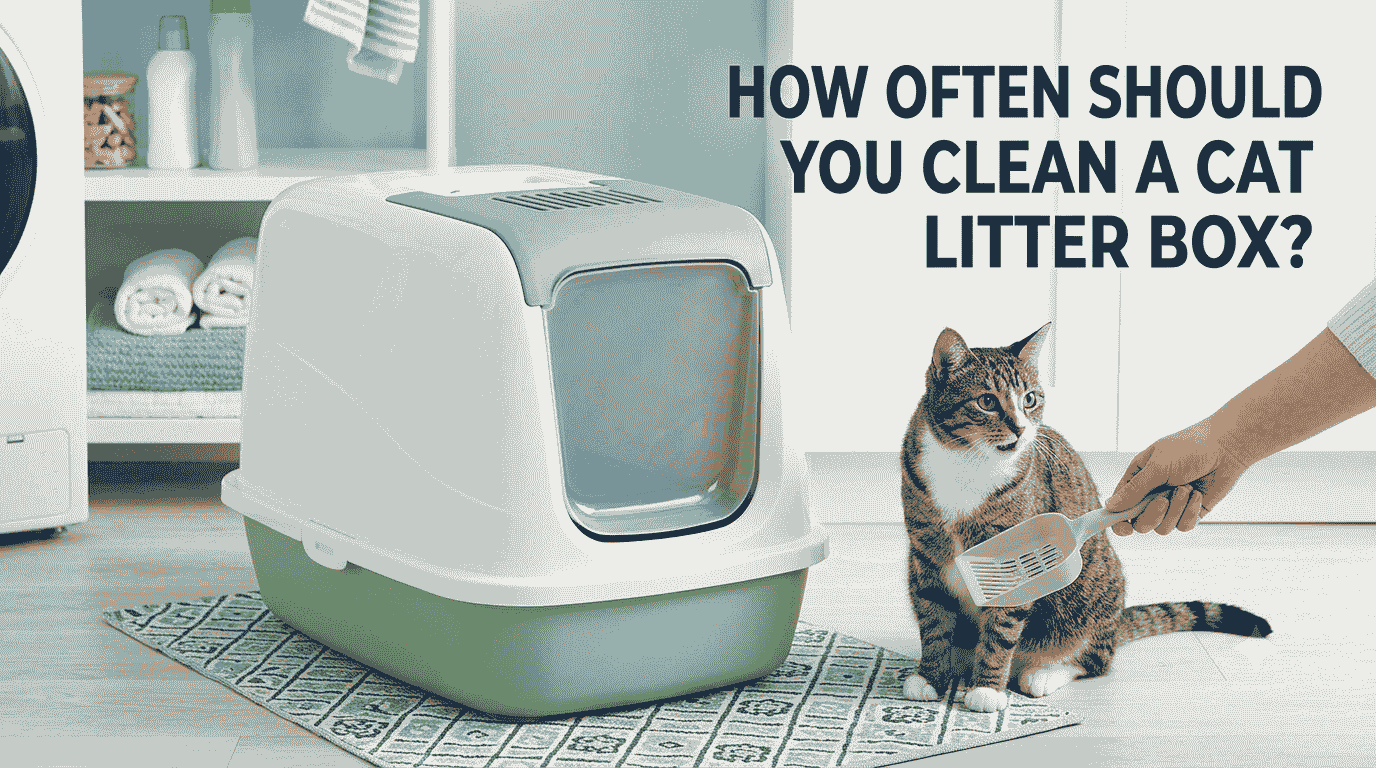
How often should you clean a cat litter box? Here’s what actually works day to day, not just the textbook answer — from someone who’s scooped through all of it.
How Often Should You Clean a Cat Litter Box?
You know the walk. Past the litter box, nose already flinching before your brain catches up, thinking I’ll deal with it later — and later somehow becomes tomorrow, and tomorrow becomes “wait, when did I last actually scoop this.”
Every cat owner has that moment. It’s not laziness, exactly. It’s just that litter boxes don’t announce themselves the way a full trash can does. They creep up on you.
So here’s the actual answer, without the vague “just clean it regularly” non-advice: scoop once a day, and do a full clean — dumping the litter, washing the box, starting fresh — every one to two weeks. That’s the baseline. But the real answer depends on how many cats you have, what litter you use, and honestly, how sensitive your own nose is.
The Daily Scoop Isn’t Optional
This is the part people skip, and it’s the part that matters most. A single cat can use the box two to four times a day. Clumping litter traps that almost immediately, so a once-a-day scoop keeps things from turning into a science experiment.
Skip it for two days and you’ll notice the shift — not just the smell, but the texture change in the litter itself, the way it starts sticking to the sides instead of clumping clean. Cats notice this before you do. A lot of them will just… find somewhere else. A pile of laundry. A bath mat. The corner of a closet you forgot existed.
Vets bring this up constantly, and not as a scare tactic. Cats are famously particular about bathroom cleanliness — more than dogs, more than most pets people compare them to — and a dirty box is one of the top reasons cats start “going” outside the box. It’s rarely spite. It’s just refusal.
The Full Deep Clean: Weekly, Not Monthly
Scooping removes the obvious stuff. It doesn’t remove the residue — the fine layer of bacteria and ammonia smell that builds up on the plastic itself, underneath the litter you can see.
Every one to two weeks:
- Dump all the litter, even the clean-looking parts
- Wash the box with mild, unscented soap and warm water (skip harsh chemicals — cats can smell them long after you can’t, and some are genuinely put off by lemon or pine scents)
- Let it dry completely before adding fresh litter
- Check the box itself for scratches, since scratched plastic holds odor no matter how well you clean it
One thing nobody tells you: the box itself has a shelf life. Plastic that’s a few years old and covered in fine claw scratches will smell faintly no matter what you do. If a full scrub-down stops fixing the smell, that’s usually your answer — not a cleaning problem, a replacement problem.
If You Have Multiple Cats, The Math Changes
This is where a lot of people get caught off guard. The standard advice — one box per cat, plus one extra — sounds excessive until you actually live it. Two cats sharing one box isn’t really “sharing.” It’s more like two people sharing one bathroom during a stomach bug. Someone’s always annoyed.
With two or more cats:
- Scoop twice a day, not once
- Keep boxes in separate areas, not lined up next to each other (cats are surprisingly territorial about this)
- Deep-clean each box on a weekly rotation so you’re not doing all of them the same day
Multi-cat households also deal with a faster buildup of ammonia smell, since more waste sits in the same footprint. If you’ve ever walked into a house with three cats and one box and immediately known it, that’s why.
Litter Type Actually Changes the Timeline
Not all litter behaves the same, and the type you use shifts how often you need to intervene.
Clumping clay litter is the most forgiving — it isolates waste fast, so daily scooping genuinely resets the box. Crystal or silica litter absorbs moisture differently and often needs less daily scooping but a faster full replacement, sometimes every few days instead of weeks. Natural litters — pine, corn, walnut — tend to break down and get dusty faster, which means more frequent full changes even if the daily scoop routine looks the same.
If you’ve switched litter brands and suddenly your old schedule doesn’t work anymore, that’s not you doing something wrong. That’s just the litter behaving differently than you’re used to.
Signs You’re Not Cleaning Often Enough
Your cat will tell you before you notice yourself. Watch for:
- Standing at the edge of the box without stepping in
- Scratching around the box instead of in it
- Shorter visits than usual, like they’re rushing
- Accidents near the box but not in it — a strong signal, not a coincidence
That last one trips people up. It looks like the cat is “protesting” or being difficult, but it’s almost always a direct complaint about the box itself. Cats don’t hold grudges the way we imagine. They just make decisions based on what’s in front of them, and a dirty box in front of them means somewhere else looks better.
What a Realistic Weekly Rhythm Looks Like
Nobody actually thinks about litter box maintenance as its own task — it gets stitched into whatever else is already happening. A reasonable rhythm, for one cat:
- Every morning or evening: two-minute scoop, timed to something else you’re already doing — feeding, coffee, whatever
- Once a week: full dump and wash, ideally on the same day so it becomes automatic instead of a decision you have to make each time
- Every few months: actually assess the box itself — scratches, smell that doesn’t go away, a lid that doesn’t latch right anymore
That’s it. It sounds almost too simple written out, but the boxes that get neglected aren’t neglected because people don’t know the rule — they’re neglected because the task has no natural trigger. Nothing tells you it’s been a week. So pick something that does: trash day, grocery day, whatever already has a slot in your week.
FAQ
How often should I scoop a cat litter box?
At minimum once a day. Twice a day if you have more than one cat sharing a box.
How often should I fully change the litter?
Every one to two weeks for clumping litter, though households with multiple cats or natural litter types may need to do it more often.
Can I go longer between full cleans if I scoop every day?
Not really — scooping removes waste, but it doesn’t remove the residue building up on the box itself. Even a well-scooped box needs a full wash eventually.
What happens if I don’t clean the box enough?
Cats often start avoiding the box, which can lead to accidents elsewhere in the house. It’s usually a direct response to the box being dirty, not a behavioral issue on its own.
Do covered litter boxes need cleaning more often?
Yes, generally. Covered boxes trap odor inside instead of letting it dissipate, so the smell builds up faster even if the box looks fine when you open the lid.